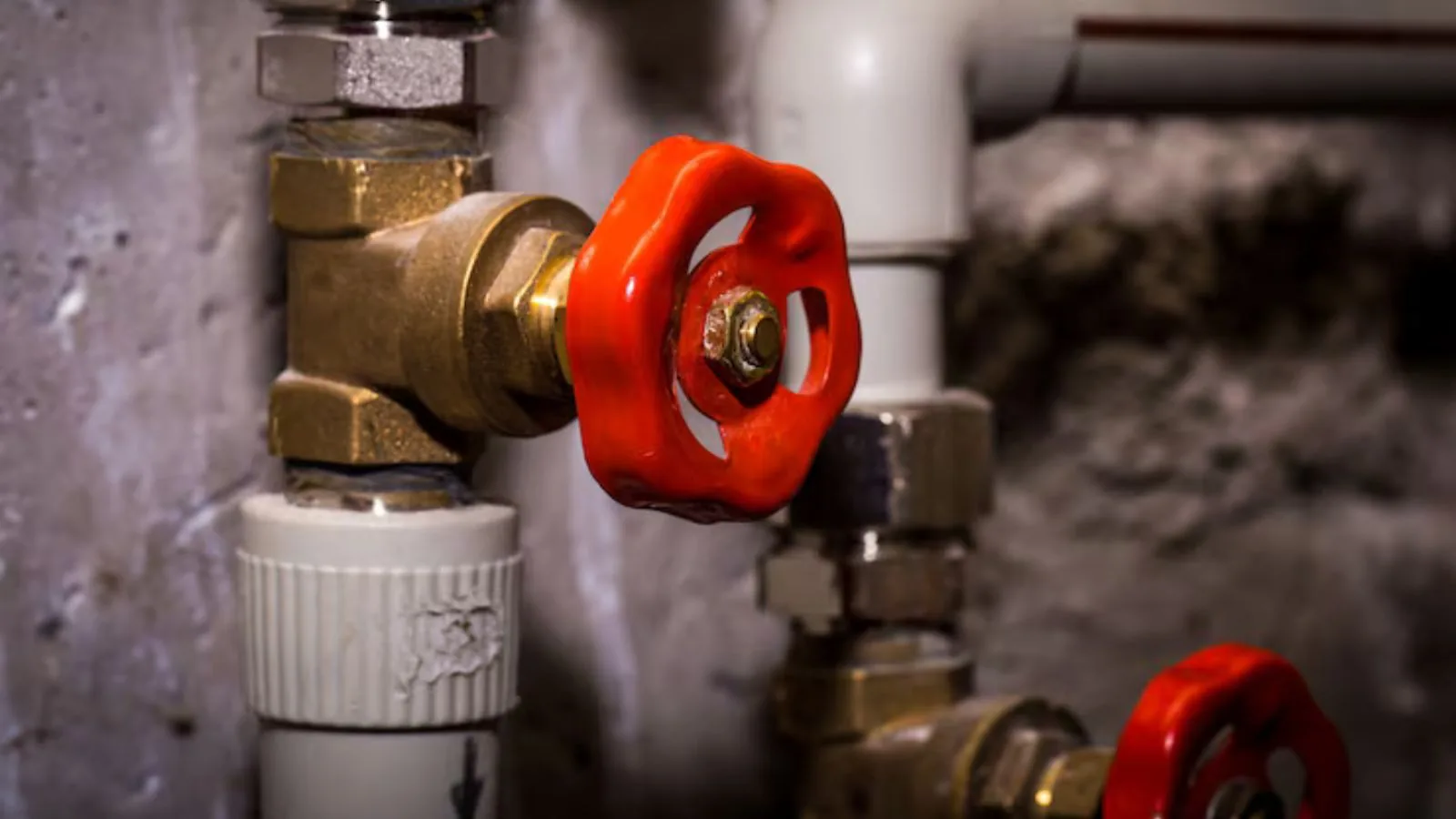
If you've received a notice from Bellevue Utilities about annual backflow testing and weren't sure why it's required or what it involves, you're not alone. It is one of the more commonly misunderstood recurring requirements for owners with irrigation systems, boilers, pools, fire sprinklers or certain commercial connections.
What A Backflow Preventer Actually Does
Under normal conditions, water flows one direction: from the public supply into your property. A backflow preventer exists to stop that flow from reversing under unusual pressure conditions, which could otherwise let contaminated water, from an irrigation system, a fire suppression system, or another non-potable source, get siphoned back into the clean public water supply.
This isn't a hypothetical risk. Fertilizer, pesticides, and standing water in an irrigation system are exactly the kind of contaminants a backflow event could introduce into a shared water system if the reversal happened without a functioning preventer in place.
Backflow Testing In Bellevue
Bellevue Utilities says state law requires properties with cross connections to install a backflow assembly and test it every year. The city's list of common triggers includes irrigation, boilers, pools and spas, water features, fire sprinklers and photo development equipment. It also says many businesses are required to have one.
The city's Cross Connection Control Program says every assembly needs an annual test by a State of Washington certified tester. The city will only accept reports from currently certified testers, and it is the customer's responsibility to make sure the report arrives on time. A first letter goes out each year, usually giving 30 days to comply, and a final door hanger notice can say that the water shall be shut off.
The city accepts test reports through an online testing portal and publishes a list of testers. Ask your tester whether they will submit the report for you, and keep a copy for your own records.
Sources: City of Bellevue Utilities backflow prevention page and the Cross Connection Control Program document.
Why Annual Testing, Specifically
A backflow preventer is a mechanical device, and like any mechanical device, it can fail over time, whether from wear, debris, or a component simply aging out. Annual testing confirms the device is still functioning as designed, rather than assuming it's fine indefinitely after installation.
Washington law and Bellevue's program both call for annual certification of backflow assemblies, specifically because the risk the device protects against doesn't go away just because the device was properly installed at some point in the past.
What The Test Actually Involves
- A certified tester checks the device's function under controlled conditions.
- Results are documented on a test report. In Bellevue the customer is responsible for making sure the report reaches the city, so ask your tester whether they will submit it for you.
- A passing test usually takes well under an hour for a single device.
- A failed test means repair or replacement, often completed the same visit.
Who This Actually Applies To
Not every property has a backflow assembly that needs testing. Bellevue Utilities lists irrigation systems, boilers, pools and spas, water features, fire sprinklers and photo development equipment as common triggers, and says many businesses are also required to have one. If you've never received a notice, you likely don't have a device requiring annual testing. If you have, act on it, because the city's notices end with a possible water shutoff.
What Happens The First Time A Property Gets A Device Installed
If you're adding an irrigation system to a property that didn't previously have one, installing the required backflow preventer typically means a permit, the physical installation, and an initial certification test before the utility considers the connection compliant. It's worth building this into the overall project timeline and budget from the start rather than treating it as an afterthought once the irrigation system itself is already in the ground.
After that initial installation and test, the property moves onto the standard annual testing cycle going forward, the same as any other property with a backflow preventer already in place.
What A Failed Test Actually Involves Fixing
A backflow preventer failure is usually mechanical: a worn check valve, a degraded seal, or debris interfering with proper seating. In most cases, this is a repair rather than a full device replacement, and it's often completed the same visit as the failed test rather than requiring a separate appointment and a second round of testing.
Once repaired, we retest to confirm the device is functioning correctly before filing the passing result with your utility, so the same visit typically resolves both the mechanical issue and the compliance requirement together.
The Difference Between Residential And Commercial Requirements
Residential backflow requirements are usually tied to a specific feature, an irrigation system being the most common trigger for a single-family home. Commercial properties often face a broader set of triggers: fire suppression systems, certain types of process water use, or connections a health department flags during a facility review. A commercial property can end up with multiple separate backflow preventers, each tied to a different system and potentially each on its own testing schedule.
This is part of why a commercial property owner should keep a clear inventory of exactly which devices are installed where, and what each one protects, rather than treating backflow compliance as a single undifferentiated requirement. We help commercial clients build and maintain that inventory as part of ongoing service, since missing one device out of several is a common, avoidable compliance gap.
Multi-family properties, apartment complexes and larger condo developments in particular, often sit at this same multi-device complexity even though they're technically residential in classification, since a larger property frequently has its own irrigation and fire suppression infrastructure similar to a commercial building. Property managers overseeing these larger residential developments benefit from the same inventory-based approach as a fully commercial client, and we're happy to set that up during an initial site visit regardless of the property's exact classification.
For a residential property with a single irrigation-tied device, the process is considerably simpler: one device, one annual test, one filing with the utility. Most homeowners find that once they've been through the cycle once, it becomes a routine, low-friction annual item rather than something that requires much thought each year, especially with a recurring calendar reminder already in place ahead of the deadline.
If this sounds like what you're dealing with, our backflow testing & prevention page covers what a visit actually involves, and commercial plumbing is worth a look too if that's closer to your situation.
We also serve nearby Redmond and Kirkland, along with the rest of the Eastside, from our Bellevue base.
Have A Plumbing Question Like This?
Call and talk to a real plumber, not a script.
Call (425) 845-0257 ☎Annual Backflow Testing in Bellevue, WA: What Owners Must Do FAQ
Consequences vary by utility. In Bellevue the city sends a first letter each year, and a final notice can state that water service shall be shut off. Schedule testing as soon as you receive a notice and keep a yearly reminder on your own calendar.
Generally no, unless your property has a fire suppression system or a specific commercial connection that requires one. Standard residential properties without irrigation typically don't have a backflow preventer requiring annual testing.
This is typically determined by your local water utility based on the type of connection your property has, particularly irrigation, fire suppression, or certain commercial uses, rather than something a homeowner opts into independently.
Testing generally needs to be performed by a certified tester whose results the utility will accept, so a DIY test typically wouldn't satisfy the compliance requirement even if performed correctly.
Bellevue only accepts reports from currently certified testers, so use the city's tester list or ask your plumber who files for you. A generic receipt does not replace the test report, because the report documents the test performed and its result.
Bellevue sends a first letter each year, usually giving about 30 days to comply. If the report still is not on file, a final notice can state that the water shall be shut off. Contact Bellevue Utilities if you are unsure of your deadline, and book your tester early.