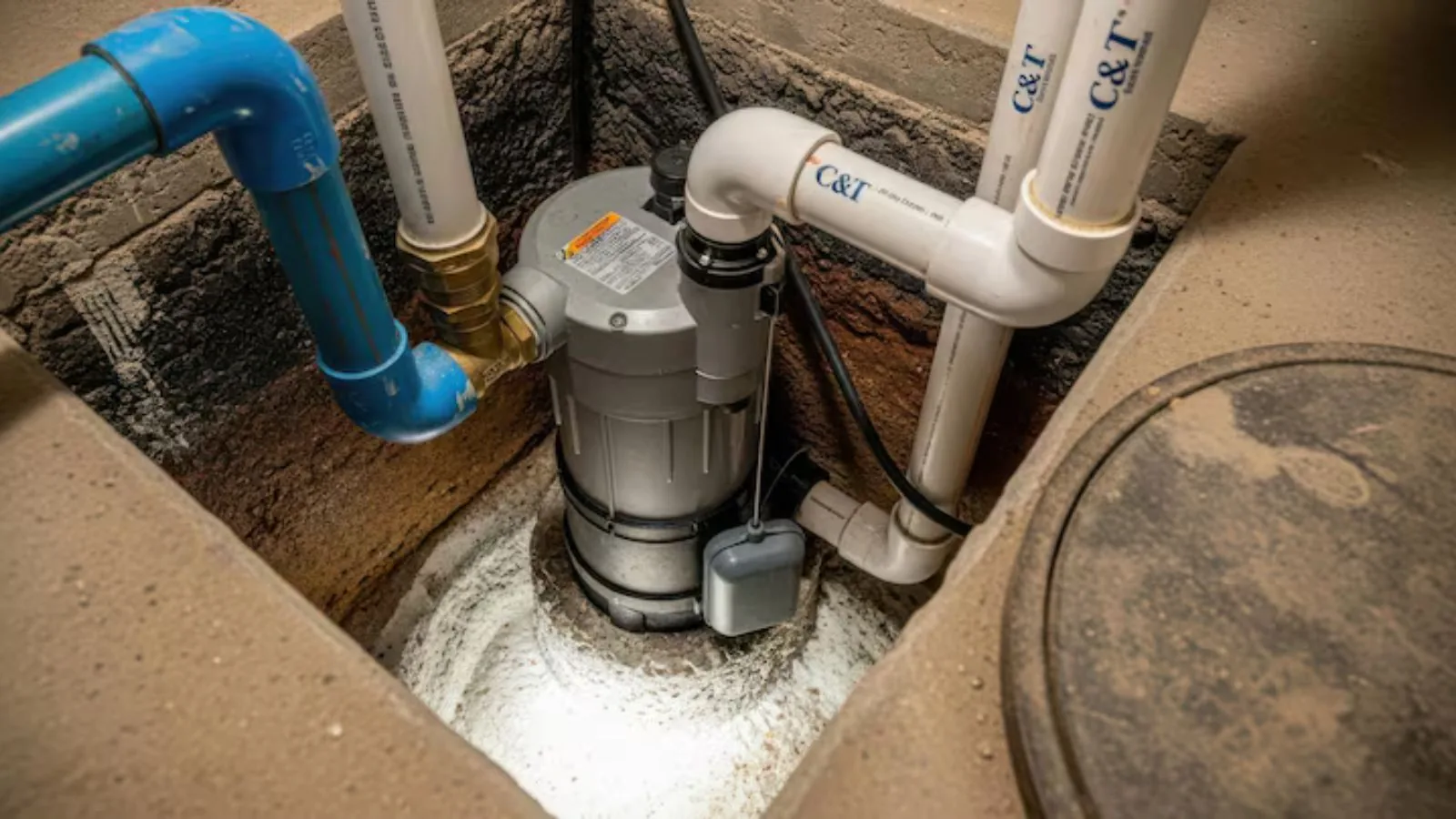
Properties near Lake Washington and Meydenbauer Bay, along with some lower-elevation lots further inland, can see more groundwater than higher ground does. That changes how a sump pump should be sized and installed for a given property.
What A High Water Table Actually Means
The water table is the depth below ground where soil is fully saturated with groundwater. Closer to a lake shoreline, that depth is naturally shallower, which means a basement or crawlspace on a property like this deals with groundwater pressure against the foundation more consistently than a property further from the water, especially during the region's wetter months.
This matters for a sump pump because a system sized for occasional, light water intrusion on a typical inland lot may be genuinely undersized for a shoreline property dealing with more consistent groundwater pressure. The pump that works fine for a neighbor a mile inland isn't automatically the right size for a home closer to the water.
Where A Bellevue Sump Pump Can Discharge
Bellevue's storm and surface water code lists categories of discharge that are permissible, including rising ground waters, uncontaminated ground water, uncontaminated pumped ground water, foundation drains, water from crawl space pumps and footing drains. Sump pumps are not named, and the director can restrict a discharge that causes a water quality problem.
The city's drainage guidance for homeowners says to contact Bellevue Utilities first if you plan to connect drain outlets to the street drainage system, and that a permit may be needed. The city's storm drainage connection permit is required for new connections, repairs and reconstruction. Confirm your routing before you install or relocate a discharge line.
Sources: Bellevue City Code 24.06.125, City of Bellevue drainage around your home guidance, U.S. Army Corps of Engineers Seattle District news release.
What We Actually Factor Into Sizing
- The pit's expected fill rate based on the property's actual proximity to the shoreline and elevation.
- Discharge routing, since some shoreline properties have drainage easement or property line considerations that affect where water can be routed.
- Battery backup, which matters more here given that the same storms that raise the water table often cause power outages.
- Whether a single pump is sufficient or a backup pump makes sense given the consistency of the water intrusion risk.
Why A Generic Pump Recommendation Falls Short
A lot of general sump pump advice online assumes a fairly standard, moderate water intrusion scenario. For a property with a genuinely elevated water table, that generic sizing can leave a homeowner with a pump that runs constantly, cycles excessively, or simply can't keep pace during the wettest stretches of the year. We assess the specific property, not just the general climate, before recommending a system.
If you're not sure whether your property falls into this higher-risk category, elevation relative to the shoreline and any history of dampness or standing water in a basement or crawlspace are the practical signs worth paying attention to, rather than assuming either way.
What Happens During A Sizing Assessment
A proper sizing visit isn't just measuring the pit and picking a pump off a standard chart. We look at the property's actual elevation relative to the shoreline, any history of water intrusion the homeowner can describe, and, where relevant, how neighboring properties on similar lots have fared during past wet seasons. That real-world pattern often tells us more than a generic formula would.
From there, we size both the primary pump and, where warranted, a backup system, and plan discharge routing that accounts for the property's specific drainage situation rather than assuming a standard route will work. It's a more involved process than a basic pump swap, but it's the difference between a system that actually keeps up during the wettest stretch of the year and one that's technically installed but genuinely undersized.
How Seasonal Variation Factors Into Long-Term Planning
Groundwater near the lake doesn't sit at a constant depth year-round. It tends to rise during the Pacific Northwest's wetter months and recede somewhat during drier stretches, and the lake itself is held near a managed level. The Army Corps of Engineers describes a normal full elevation target of 22 feet, reached in spring. A pump that seems adequate in a dry summer can be tested during a wet winter, so size for the worst season.
We factor seasonal variation into any sizing recommendation for a shoreline or low-lying property, rather than basing the assessment only on the conditions present during the visit itself.
Maintenance That Matters More For High-Water-Table Properties
A sump pump on a property with a genuinely elevated water table works harder and more consistently than one on a typical inland lot, which means maintenance matters more here, not less. Checking the pit for debris buildup, confirming the float switch moves freely, and testing actual pump function periodically are all worth doing more frequently on a property that's relying on the system heavily rather than occasionally.
We recommend a more frequent maintenance check for shoreline and low-lying properties specifically, roughly twice a year rather than the once-a-year check that's often adequate for a lower-risk inland property, given how much more consistently these systems are actually running.
A good practical rhythm is checking once before the wet season ramps up in fall and once partway through winter, when the system has already been under real, sustained seasonal load. Any developing issue is far more likely to have already clearly shown itself by that specific point in the season, giving you real, genuine time to address it properly before the heaviest spring rains actually arrive across the Eastside region.
If this sounds like what you're dealing with, our sump pump installation & repair page covers what a visit actually involves, and water damage restoration is worth a look too if that's closer to your situation. We serve Newcastle and the rest of the Eastside from our Bellevue base, with the same local coverage either way.
We also serve nearby Mercer Island and Renton, along with the rest of the Eastside, from our Bellevue base.
Have A Plumbing Question Like This?
Call and talk to a real plumber, not a script.
Call (425) 845-0257 ☎Sump Pumps Near Lake Washington: Bellevue Homeowner Guide FAQ
Proximity to Lake Washington or Meydenbauer Bay, low elevation relative to the surrounding area, and any history of dampness or water intrusion in a basement or crawlspace are the practical indicators. We can assess your specific property during a visit.
For a property with a genuine high water table risk, it's a real, practical recommendation, not an upsell. The same storms that raise groundwater levels most are often the storms most likely to cause a power outage, which is exactly when a pump without backup power fails.
Sometimes, if the existing pit and discharge line can accommodate a higher-capacity pump. Other times, particularly if the pit itself is undersized for the property's actual water intrusion rate, a fuller system upgrade makes more sense, which we'd confirm during an assessment.
Not universally, it depends on the specific property's elevation, foundation type, and any history of water intrusion. A property assessment is the reliable way to determine actual need rather than assuming based on general proximity to the lake.
Pump life varies with the model and how hard it works. A pump on a property with a high water table runs more often and may wear sooner, so plan on inspecting it regularly and replacing it before it fails during a storm.
Not without checking first. The city's code lists uncontaminated pumped ground water as a permissible discharge category, but its drainage guidance says to contact Bellevue Utilities before connecting drain outlets to the street drainage system, and a permit may be required.