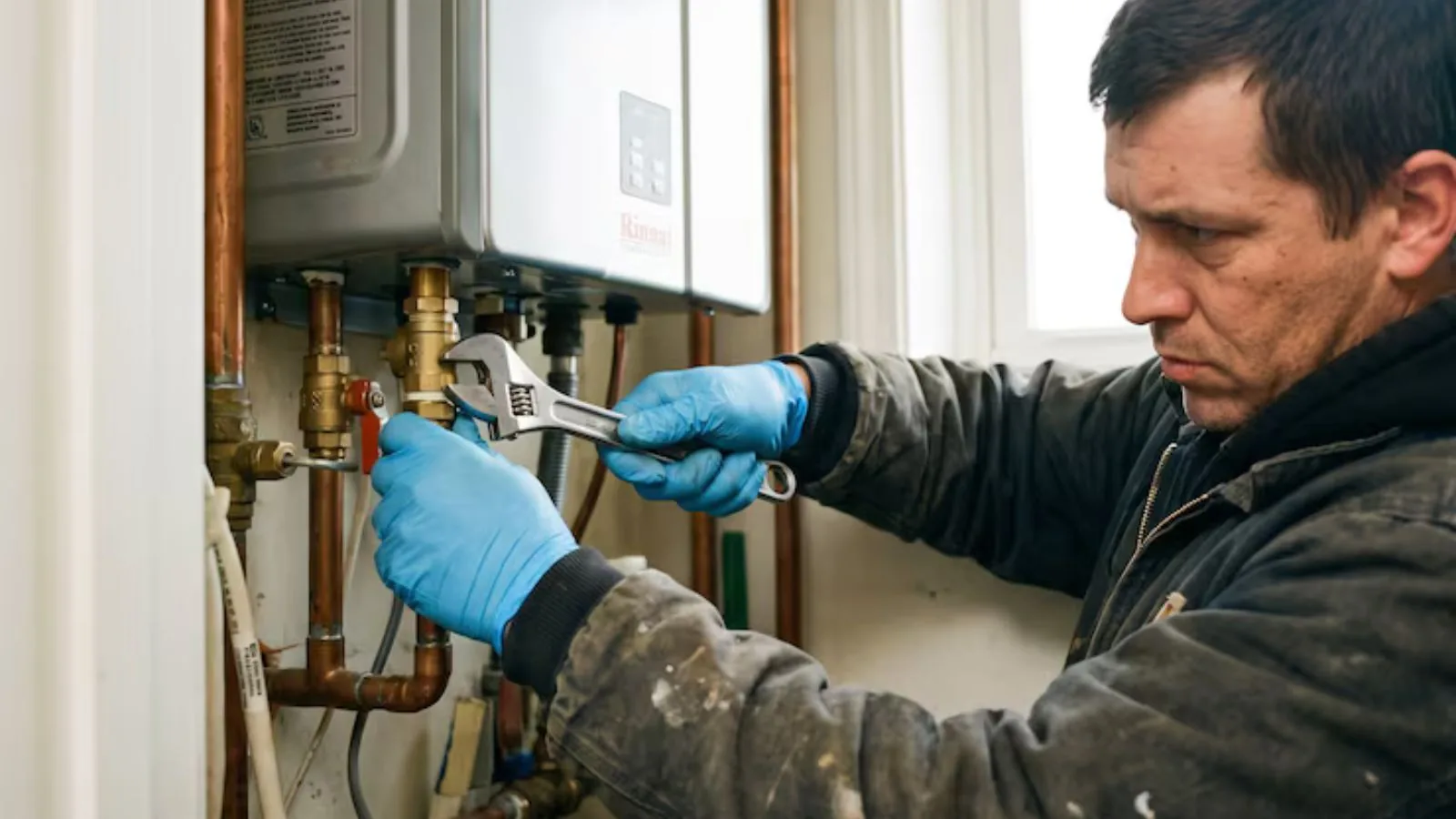
Downtown Bellevue and the Overlake area have added a lot of dense, newer housing over the past decade. A lot of that housing comes with real constraints a single-family home doesn't: limited mechanical space, shared walls, and sometimes stricter rules about what can go where. That changes the tank-versus-tankless conversation in a real way for condo owners.
Space Is Usually The Deciding Factor
A standard 40 or 50-gallon tank takes up real floor space that a condo mechanical closet often doesn't have to spare. A tankless unit mounts on a wall and takes a fraction of the footprint, which is why many condo owners consider it. Whether it is allowed in your building depends on venting, gas supply, association rules and the energy code.
What Washington's Energy Code Means For Bellevue Condos
Washington's 2021 State Energy Code took effect March 15, 2024, and Bellevue adopted the 2021 codes on that date. For apartment and condo buildings more than three stories above grade, the code sends the building to its commercial provisions. Those provisions say service hot water shall be provided by an electric air-source heat pump water heating system, with listed exceptions.
For an individual unit in a building of three stories or less, a water heater serving only that unit may comply under the residential provisions instead. Taller buildings can also use a fossil fuel compliance path with added efficiency credits. We have not verified how Bellevue's permit office applies these provisions to a specific building, so ask your building engineer or the city before you plan a swap.
Sources: Washington State Building Code Council 2021 Washington State Energy Code commercial and residential editions, City of Bellevue building and fire codes page.
Hot Water Demand In A Smaller Household
Many condo households are smaller than a typical single-family home, which changes the math on hot water demand too. A tank sized for a family of four running two showers back to back is often more capacity than a one or two-person condo household actually needs. A tankless unit scales to actual usage instead of a fixed tank size, without ever technically running out mid-shower.
What HOA Rules Sometimes Require
Some condo and townhome associations have specific requirements around water heater type, venting, or even brand, particularly in shared-wall construction where venting has to route through common areas. It's worth checking your HOA's rules before assuming you can install whichever system you prefer, since the mechanical constraints of dense construction sometimes come with matching association rules.
The Honest Trade-Off
Tankless costs more upfront and needs periodic descaling to stay efficient, particularly without a water softener. Tank systems cost less initially and are simpler to service, but they take up space and can run out of hot water during heavy simultaneous use. Space often favors tankless, but confirm against your unit's mechanical closet and your building's rules rather than assuming.
What A Failed Tankless Unit Actually Means For A Condo Owner
When a tankless unit fails in a condo, the troubleshooting path is a bit different than in a single-family home, mostly because of shared venting and, sometimes, shared gas supply infrastructure that a single-family homeowner doesn't have to think about. Before assuming a unit itself has failed, it's worth confirming the issue isn't actually a building-level gas pressure or venting problem affecting multiple units.
This is exactly the kind of diagnostic step that benefits from a plumber who's already familiar with a specific building's mechanical systems. It's part of why we try to build that familiarity across the condo and townhome buildings we service repeatedly.
What To Ask Before Buying Into A Condo With An Unknown System
If you're touring a condo and the listing doesn't specify tank versus tankless, it's a reasonable question to ask directly, since the answer affects both your day-to-day hot water experience and your eventual replacement costs and timeline. A tank system nearing the end of its service life is a near-term expense worth factoring into your purchase decision. A newer tankless system generally has a longer runway before replacement.
It's also worth asking whether the unit is the building's original installation or has already been replaced once, since that tells you where in its expected lifespan the current system actually sits, information that isn't always obvious just from looking at the unit itself.
What A Condo Association's Master Insurance Policy Sometimes Requires
Some condo associations' master insurance policies include specific requirements around water heater installations, sometimes requiring a leak detection device or automatic shutoff valve alongside the unit. A water heater failure can cause much more damage in a shared-wall, multi-unit building than in a standalone single-family home.
It's worth checking your specific association's requirements before a new installation. A technically code-compliant installation that doesn't also meet your HOA's insurance-driven requirements can create a coverage gap you'd only discover after an actual failure, the worst possible time to find out.
We ask about HOA requirements as a standard question on any condo installation. A quick email or call to your HOA's management company before scheduling is usually all it takes to confirm there's no conflict, and we're glad to help coordinate that outreach. It is far easier to address upfront than after a claim reveals a mismatch.
If this sounds like what you're dealing with, our tankless water heater service page covers what a visit actually involves, and water heater installation & replacement is worth a look too if that's closer to your situation.
We also serve nearby Redmond and Kirkland, along with the rest of the Eastside, from our Bellevue base.
Have A Plumbing Question Like This?
Call and talk to a real plumber, not a script.
Call (425) 845-0257 ☎Tankless vs Tank Water Heaters for Bellevue Condos FAQ
Often yes, though it depends on your unit's existing venting and gas supply, and sometimes on HOA approval for the change. We assess this during an initial visit before recommending a conversion.
Descaling frequency depends on your water and the manufacturer's guidance, and units run without a water softener may need it more often. It's a routine maintenance item, not a sign something's wrong with the unit.
Not universally. Plenty of buildings use central systems or tanks, so check your specific building or unit's setup rather than assuming based on the building's age.
Tankless units do make some operational noise when running, though modern units are generally quieter than older models. It's worth asking about noise levels for a specific model if your unit is near a bedroom wall.
It can contribute positively, since tankless units generally use less energy than a standard tank by not maintaining a constant reservoir of heated water around the clock, though the overall impact on a building's rating depends on many other factors too, not water heating alone.
It depends on the building. Under the state energy code, residential buildings more than three stories above grade follow the commercial provisions, which call for electric heat pump water heating with exceptions, plus a fossil fuel path with added efficiency requirements. Ask your building engineer or the city.