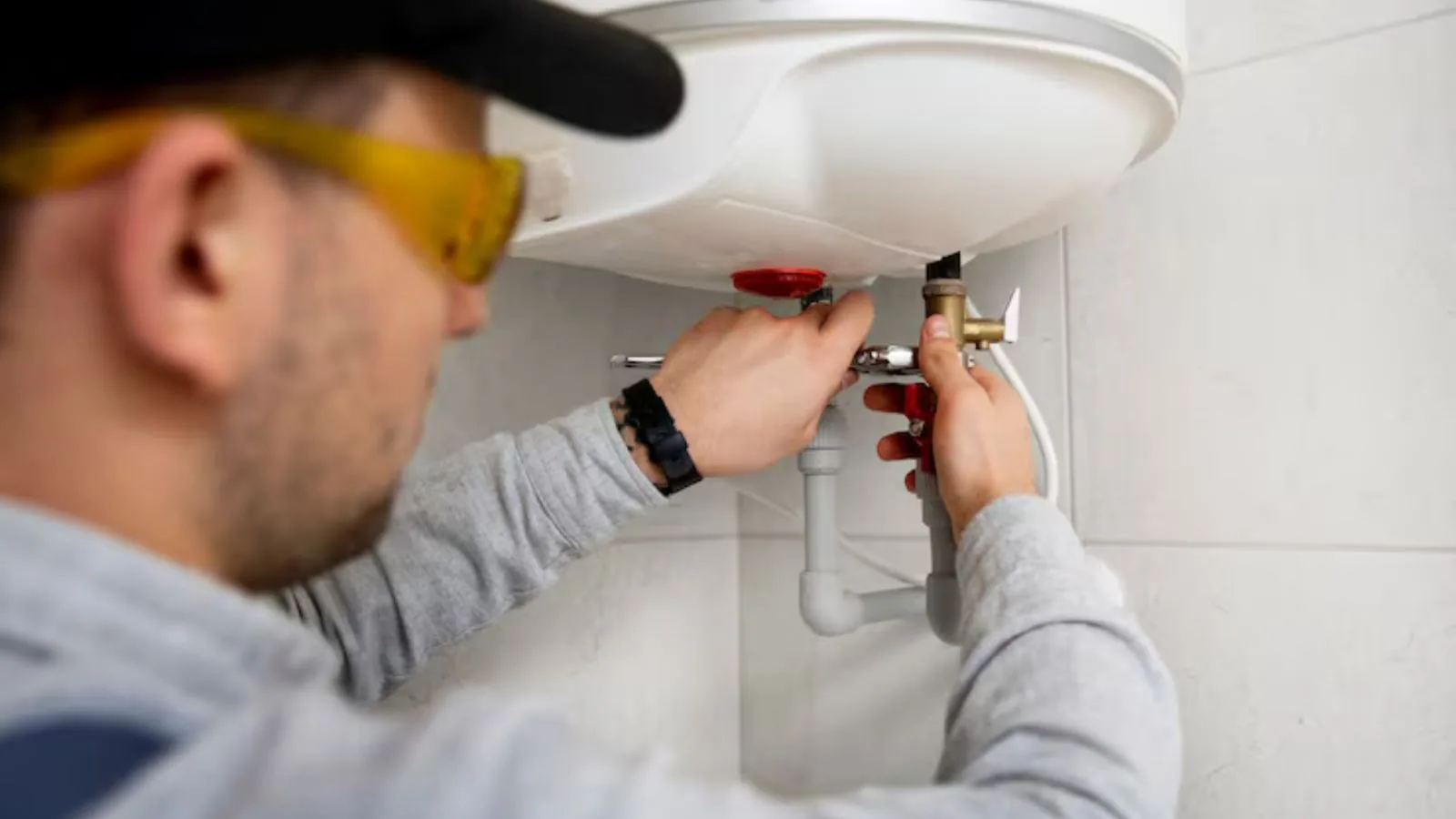
The Pacific Northwest sits on real earthquake risk, and Washington's building code reflects that directly in how water heaters are required to be installed. Seismic bracing isn't optional trim or an upsell. It's a code requirement, and it's one of the more common items we find missing or improperly installed when we're already on site for something else.
The Actual Requirement
Washington's plumbing code says water heaters shall be anchored or strapped to resist horizontal displacement due to earthquake motion. The straps go within the upper one third and lower one third of the tank's height, and at the lower point the strap must stay at least four inches from the controls. A single strap, or straps attached to something that won't hold under real lateral force, doesn't meet the standard even though it might look like bracing.
Seismic Strap Rules In Bellevue
Bellevue enforces the 2021 Uniform Plumbing Code through Chapter 23.60 of its city code, and the city adopted the 2021 codes effective March 15, 2024. The state's version of the plumbing code says water heaters shall be anchored or strapped to resist horizontal displacement due to earthquake motion, with straps in the upper and lower thirds of the tank.
Bellevue requires a permit and inspection when you replace a water heater, and the permit comes from the city rather than King County. The city pages we reviewed do not list strapping details, so use the state rule as your baseline and confirm anything specific with your inspector.
Sources: WAC 51-56-0500, Bellevue City Code chapter 23.60, City of Bellevue permit and building code pages.
Why This Gets Missed
Seismic bracing is exactly the kind of thing that's easy to skip on a rushed replacement, especially if the old water heater didn't have it either and nobody flagged the gap at the time. It's also a common finding during a home sale inspection, since a previous owner's DIY replacement or an older installation from before the requirement was consistently enforced sometimes never got proper bracing added.
What To Check On Your Own Water Heater
- Check for two straps: one in the upper third of the tank, one in the lower third.
- Confirm the straps are anchored to solid framing rather than just drywall or a finished surface, and that they sit at least four inches above the controls at the lower point.
- If a tank has no bracing at all, that's a real gap worth fixing regardless of the tank's age or condition otherwise.
- Approved seismic bracing kits are available at most hardware retailers if a straightforward retrofit is all that's needed.
When We Check For This
Every water heater installation or replacement we do includes proper seismic bracing as part of the job, not as an add-on. When we're out for a repair rather than a full replacement, we check the existing bracing while we're already there. It takes only a few minutes to confirm, and a missing or failed strap is a genuinely easy fix compared to most of what else we might find.
This isn't a scare tactic or an upsell dressed up as a safety concern. It's a real, specific requirement tied to a real, specific risk in this region, and it's cheap and fast to get right compared to almost anything else involved in a water heater job.
What Actually Happens If Bracing Fails During An Earthquake
An unbraced water heater can tip or shift during significant ground shaking, which puts stress directly on the rigid water and gas connections at the top of the tank. A gas line that shears or a water connection that breaks isn't just a plumbing inconvenience in that scenario. A sheared gas line specifically introduces a real fire risk on top of whatever structural damage the earthquake caused, exactly what the bracing requirement exists to prevent.
This is part of why seismic bracing isn't treated as optional trim in Washington building code the way it might be in a region with minimal earthquake risk. The requirement reflects a real, specific hazard this region actually faces, not a generic safety rule applied uniformly regardless of local risk.
How We Check This During An Unrelated Service Call
When we're at a property for a water heater repair, or honestly any plumbing call where the water heater happens to be nearby, checking the seismic bracing takes only a minute or two. We confirm two straps are actually present, anchored to real structural framing rather than just the surrounding wall surface, and genuinely snug rather than loose enough to allow any real movement.
If we find bracing that's missing, loose, or improperly anchored, we'll flag it and offer to fix it as a quick addition to whatever else brought us out, rather than treating it as a separate, standalone visit. It's rarely worth the hassle of scheduling a second trip for something this straightforward to correct.
How This Requirement Compares To Other States
Seismic bracing requirements for water heaters aren't universal across the country. They're concentrated in states with genuine earthquake risk, California and Washington among the more prominent examples, while a state without meaningful seismic activity typically has no equivalent requirement at all. If you're new to Washington from a state without this rule, it's a real, functional difference in what's expected during any water heater work here, not just a formality.
This regional specificity is part of why it's worth confirming current requirements directly rather than relying on general knowledge from elsewhere, even general plumbing knowledge that's accurate in most other respects. A licensed local plumber stays current on requirements like this specifically because they vary by region in ways that matter.
If you're working with a contractor unfamiliar with Washington's specific seismic requirements, it's a reasonable thing to ask about directly before work begins, rather than assuming general plumbing competence automatically includes regional seismic code familiarity.
If this sounds like what you're dealing with, our water heater installation & replacement page covers what a visit actually involves, and water heater repair is worth a look too if that's closer to your situation.
We also serve nearby Newcastle and Renton, along with the rest of the Eastside, from our Bellevue base.
Have A Plumbing Question Like This?
Call and talk to a real plumber, not a script.
Call (425) 845-0257 ☎Water Heater Seismic Straps in Bellevue, WA: Code Basics FAQ
It's a straightforward retrofit for a handy homeowner using an approved bracing kit, as long as the straps anchor to real structural framing. If you're not confident locating solid framing or sizing the straps correctly, it's a quick add during any other service visit.
Bellevue requires a permit and inspection for a water heater replacement. Bellevue's pages do not spell out the strapping steps, so ask your plumber and the inspector what they will look for, and have the straps installed before the inspection.
Tankless units are typically wall-mounted rather than free-standing, which changes the mounting method. Follow the manufacturer's instructions and ask your plumber and the city what applies to your unit.
It's a relatively inexpensive retrofit, typically a small addition to any other service visit rather than a significant standalone expense, given how quick the strap installation itself is once the framing is located.
The core requirement traces back to Washington's state plumbing code. Bellevue enforces its adopted plumbing code through its own development services, not through King County public health, so ask the city that issues your permit what it checks.
Bracing requirements apply the same way regardless of occupancy status. A landlord is responsible for ensuring a rental property's water heater meets the same code requirements as any owner-occupied home, and it's worth confirming during any tenant turnover.
Bellevue requires a permit and inspections for a water heater replacement. Washington's plumbing code requires straps in the upper and lower thirds of the tank, but Bellevue's pages do not list strapping details. Ask your inspector or plumber what will be checked, and install the straps before the inspection.