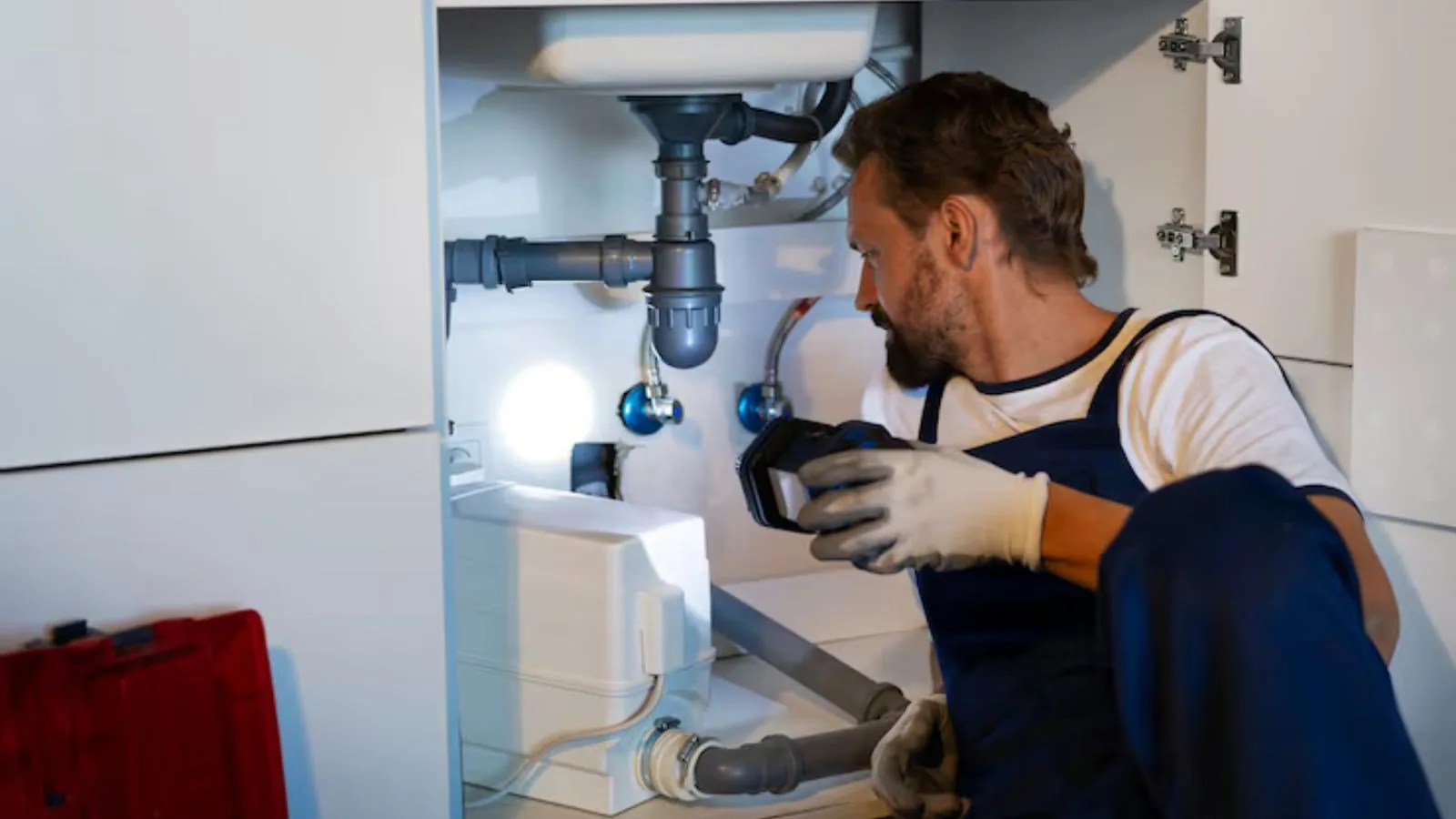
A slab leak is a leak in a water line that runs underneath a home's concrete foundation, and it's one of the more disorienting plumbing problems homeowners deal with, because there's often no visible source at all, just symptoms that point somewhere underneath the house.
Why Slab Leaks Are So Hard To Spot
In a home built on a concrete slab, supply lines can run directly through or under the slab. Combine an aging, corrosion-prone pipe material with a location that makes any leak invisible and expensive to access, and you have the pattern behind many slab leak calls. Homes with accessible crawlspace plumbing are easier to inspect and repair.
Using Your Bellevue Water Meter To Check For A Leak
Bellevue's electronic water meters display FLOW when water is moving through them. If every fixture is off and the meter still shows FLOW, you may have a leak. The meter shows LEAK if water has flowed continuously for at least 24 hours, and it takes one full hour without flow for the message to disappear. The meter display updates about every 32 seconds, so the icon can lag.
The Bellevue Utilities customer portal shows hourly usage and sends automatic leak alerts. The city says continuous 24 hour usage is a strong sign of a leak. Leaks at or beyond the point where your line connects to the city's system are the customer's responsibility.
The city offers a one-time adjustment for a leak caused by damage to the outside buried service line at your home, and it excludes irrigation systems, pools or water features and boat docks. A slab leak under the house is on the customer side and may not qualify, so confirm with Bellevue Utilities before you count on an adjustment.
Sources: City of Bellevue Utilities water leaks page and billing adjustments for leaks page.
The Signs That Usually Prompt A Call
- A warm spot on the floor, since a hot water line leak warms the surrounding slab.
- A water bill that's climbed with no obvious explanation.
- The sound of running water when every fixture in the house is off.
- Unexplained dampness or a musty smell near the floor with no visible source.
What Detection Actually Involves
We use acoustic and electronic leak detection equipment to trace the sound and pattern of water escaping under pressure, which pinpoints roughly where the leak is before any concrete gets touched. This is a meaningfully different approach from guessing based on symptoms alone and cutting into the slab to search, which is more invasive and more expensive than it needs to be when the leak's actual location can be found first.
Once the leak is located, the repair itself depends on what detection found. Sometimes a targeted access point is enough to reach and fix the specific section. Other times, particularly when a slab-run line has failed once and is showing signs of broader corrosion, rerouting the line above the slab entirely is the more durable long-term fix, avoiding the slab altogether for that supply run going forward.
Insurance And Slab Leaks
Whether a slab leak is covered by homeowner insurance depends heavily on the specific policy and whether the damage is treated as sudden and accidental versus gradual wear. It's worth documenting the leak thoroughly and checking your specific policy language rather than assuming either way.
What To Expect Cost-Wise, In General Terms
Detection itself is priced separately from whatever repair follows, and it's generally a more modest cost than homeowners often fear going in, since it's a diagnostic visit rather than the repair itself. The repair cost afterward depends heavily on what detection finds: a single, accessible point of failure is a very different scope than a line showing signs of broader corrosion that points toward a full reroute.
We'd rather walk a homeowner through the real range of possible outcomes upfront, from a straightforward targeted repair to a more involved reroute, than let anyone assume the worst-case scenario is the only outcome before detection has even confirmed what's actually happening under the slab.
Why Waiting Rarely Saves Money
A slow slab leak that goes unaddressed doesn't stay the same size. It continues to lose water into the ground beneath the foundation, which can eventually affect soil stability under the slab itself in addition to the immediate water waste. What might have been a straightforward, targeted repair when first suspected can become a more involved job the longer it goes unaddressed, simply because the affected area keeps growing.
This is part of why we'd rather a homeowner call about a possible slab leak that turns out to be something else entirely than wait on a real one hoping it resolves on its own. Detection itself is a modest, low-risk step. An unaddressed active leak is not.
How Detection Technology Has Improved Over Time
Older approaches to suspected slab leaks sometimes relied more heavily on educated guessing and exploratory access, opening up a section of slab based on where symptoms seemed strongest rather than pinpointing the actual source first. Modern acoustic and electronic detection equipment has made that exploratory approach largely unnecessary for most cases, since the technology can trace the specific sound signature of pressurized water escaping with meaningful precision.
This matters practically because it means a slab leak repair today is typically far less invasive than it might have been years ago, a targeted access point based on confirmed location rather than a larger exploratory opening based on a best guess.
The technology doesn't eliminate the need for repair work, but it significantly reduces how much unnecessary concrete actually gets disturbed to get there. That also tends to reduce the overall repair timeline, disruption to the home, and total project cost involved in most typical cases we actually see day to day.
For homeowners who've heard stories about a slab leak meaning a jackhammer through the living room floor, it's worth knowing that outcome is now closer to a worst-case scenario than a typical one, thanks specifically to how much detection accuracy has improved.
If this sounds like what you're dealing with, our leak detection page covers what a visit actually involves, and repiping & whole-home pipe replacement is worth a look too if that's closer to your situation.
We also serve nearby Redmond and Sammamish, along with the rest of the Eastside, from our Bellevue base.
Have A Plumbing Question Like This?
Call and talk to a real plumber, not a script.
Call (425) 845-0257 ☎Slab Leak Detection in Bellevue: What the Visit Involves FAQ
Not for detection. Acoustic and electronic detection equipment locates the leak first, without cutting anything, so any necessary access is targeted rather than exploratory.
Not always, it depends on the specific situation and the line's overall condition. For a line that's already failed once and shows signs of broader corrosion, rerouting above the slab is often the more durable choice. A single isolated failure in an otherwise sound line may just need a targeted repair.
Yes, an active leak doesn't resolve on its own, and continued water intrusion can worsen both the immediate damage and, over time, the foundation itself. It's worth scheduling detection promptly once you suspect a slab leak rather than waiting.
Not typically through a standard visual inspection alone. If you're concerned about a specific older home, a dedicated leak detection visit is a more reliable way to check before closing than relying on a general inspection to catch it.
It can. An older slab may have more brittle or already-stressed concrete around the repair area, which we account for when planning access carefully, though the core detection and repair approach remains largely consistent regardless of the slab's actual age or condition.
Turn off every fixture and look at the meter. If the FLOW icon is showing, water is moving. If LEAK appears, water has run continuously for at least 24 hours. A meter reading that keeps changing with everything off is a strong reason to call for leak detection.